DANCE BETWEEN ARTISTIC AUTONOMY AND SHARING OF PRACTICES IN THE NEW MILLENNIUM
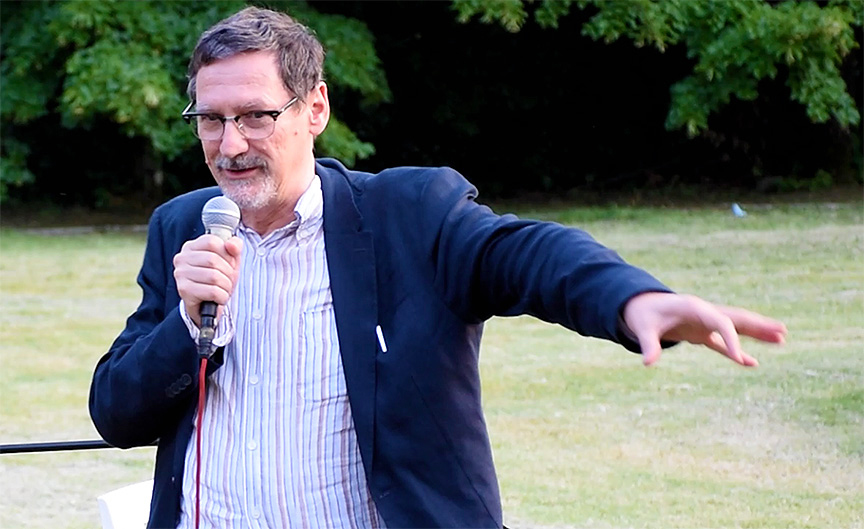
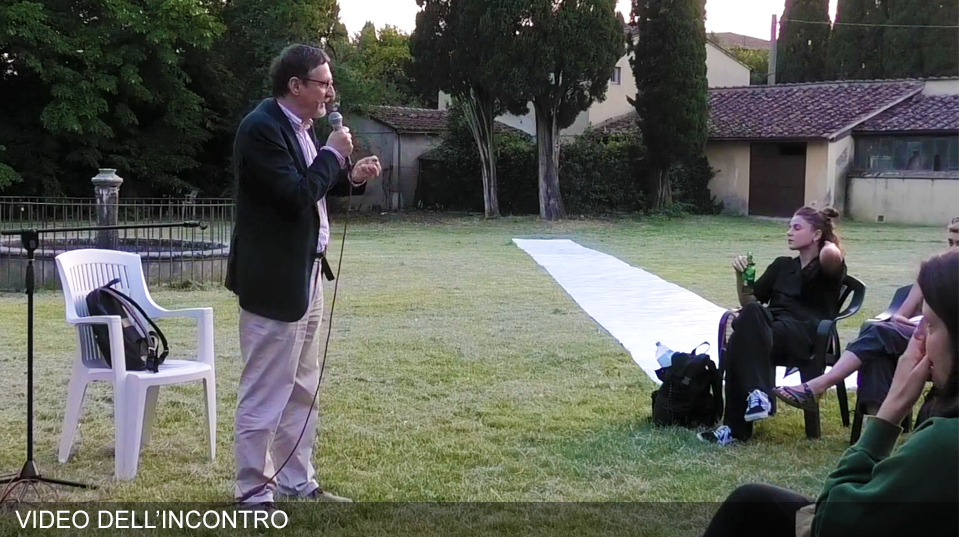
Professor Pontremoli strongly feels the need to communicate his research to a non-specialist audience and to engage with dance professionals in a reflection that is not conducted with the body but in rational terms. He recognizes dance as a practice of his life.
Reactivating dance from the past, by rediscovering the traces left since the 15th century, and examining how it relates to a contemporary body is a valid means of questioning and understanding what dance is and, more specifically, what dance is today. Our bodies have not changed much; their anatomical potential remains the same as those of the past. So, what is the major change? Over the past fifteen years, dance has undergone a paradigm shift that is clearly recognizable, though not yet fully realized.
The Western capitalist vision generates a concept of dance that dates back to the historic time of the birth of Aesthetics, a discipline that emerged in the 17th century, questioning notions of beauty, the sublime, and art. In the eighteenth century, the arts, including dance, begin to assume an autonomous dimension, separate from the rest of existence. It is in this period, that Art ceased to be a practice among many others, and became an art of the artistic Olympus, no longer connected to everyday human experience but rather something handled only by its initiates, the priests of art, who held the authority to define what was beautiful or ugly. This phenomenon is based on a vision of art as something that is not completely graspable as knowledge but can only be perceived superficially. If aesthetics is the discipline that questions what is beautiful and what is not, considering art as detached from daily life and accessible only to a select few, do we still need such a discipline today?
The changes occurring in contemporary art intersect with the transformations in aesthetics. Philosophers working in this field are recording a revolutionary moment that is breaking down conventions in art and dance that have persisted over the last twenty years.
According to an eighteenth-century esthetic perspective, dance could only be performed by individuals whose bodies met the artistic beauty standards of the time. The dancing body “had” to be healthy and physically fit, capable of executing virtuosic and captivating movements, while the audience bore witness to these almost supernatural and ethereal gestures that inspired wonder and were undeniably beautiful. This concept inevitably brings to mind the dancer, Roberto Bolle. The beautiful, healthy, and physically adept body is the result of strict bodily discipline. Consider the routine of a dancer, subjected to hours of training at a barre in front of a mirror, chasing the perfection of their movements.
A philosopher who extensively studied mechanisms of bodily discipline is Michel Foucault. In his text Discipline and Punish: The Birth of the Prison, the French philosopher describes the fundamental characteristics of power and discipline over bodies, which are meticulously reorganized in their movements and behaviors.
In dance, this notion of subjugating bodies to power can be linked to the relationship between body and technique. Academic dance is the quintessential technique, within which various evolutions and characterizations have developed. Throughout the 20th century, new techniques emerged aiming to liberate the body. A pioneer of this change was Martha Graham, who developed a new technique based on a fresh bodily conception centered on contraction and release of muscular energy. However, every attempt at a paradigm shift has been followed by a return to "the father’s house." This is evident in “Acts of Light”, Graham’s creation, which does not distance itself from academic dance. Another example is Merce Cunningham, whose early works with John Cage differ significantly from his later ones.
In Western culture, there is a process driven by the market, which requires the return to processes of homogenization and recognizability of products, relying on bodily discipline. Dance has undergone great revolutions but has ultimately reverted to the eighteenth-century notion of surface aesthetics. The first major revolution that challenged the idea of dance as an art reserved for the elite occurred in the 1960s. This was followed by a return to the past, leading to another paradigm shift in the 1990s, which once again concluded with a revival of past traditions.
Since the 2010s, there has been another attempt at a paradigm shift based on a return to the idea of practice. Why speak of ‘practice’? To try and explain this, Professor Pontremoli references back to Aristotle. The Stagirite argued that artistic practice involves a process of mimesis, or imitation of actions. In this sense, Aristotle can be considered a neuroscientist without MRI, a true precursor to the discovery of mirror neurons. Dance and theater are biological forms of knowledge, as they derive from embodied cognition. Therefore, transmission as an imitative process between bodies does not require scientific proof. Those who practice dance know that transmission occurs through imitation in the presence of another body. All bodies are predisposed to this process of transmission because dance is a practice. If we speak of practice, we can recognize dance as an organized behavior of the species. Should dance then be considered an art belonging to an exclusive Olympus? No. The reason is simple: dance is an organized practice of the species. This means that every human being is biologically predisposed to dance because dance serves a purpose.
Those who support a Kantian view of art would not agree with this utilitarian conception of dance, because recognizing a purpose for art would mean not identifying it as art, since art should have an end without a purpose.
Pontremoli, distancing himself from Kant, asserts that dance is necessary for the survival of the human species, for adaptation and transformation. Humans are an organized species and, as such, possess a learning mechanism that develops through structured behaviors.
Alva Noë, a scientist and philosopher associated with the perceptual sciences, became interested in dance thanks to his partner, who had been a dancer with Forsythe. When the American choreographer created “Motion Bank”, a research project that brought together architects, philosophers, and scholars from various fields to explore the experience of dance on all levels, Alva Noë was among these scholars and was the one who argued that dance is an organized behavior of the species.
At this point, a crucial issue remains to be addressed: choreography. What, then, is choreography? If we consider dance as a human practice, what do we mean when we talk about choreography? Professor Pontremoli asserts that choreography is nothing more than a second-level cultural process. If we observed a two-year-old child, who is not yet able to stand on their own, listening to music, we would notice that they are capable of moving through space following a rhythm without having received any formal instruction. The child dances, knows how to dance, just as they know how to attach to their mother’s breast to feed without any instruction.
Socio-cultural interventions are then applied to this type of organized species-specific behavior. All bodies are capable of dancing; those who do not dance choose not to. This choice is the product of a socio-cultural intervention on a biological, species-specific factor. Moreover, as we know, socio-cultural elements acting on bodies are capable of modifying the same biological processes. If we placed a two-year-old child in front of a television showing Michael Jackson music videos, that child, within a few months, would be able to move exactly like the famous pop star. In this case as well, we can observe how a socio-cultural factor is layered onto a biological one: choreography intervenes in dance.
Contemporary dance today, also drawing on Giorgio Agamben’s concept of the apparatus, seeks to return dance to the practice of everyday life, because only in this specific context does dance recover its political significance and transformative power, positioning itself as a form of resistance against all the power apparatuses that, over time, have confined it to an elite and privileged art form.
Dance is a practice of the body, as it belongs to the sphere of human-species practice. This paradigm shift affects not only dance today but also all other arts, including those heavily influenced by economic interests. In recent years, the Venice Biennale has showcased works that have positioned themselves as forms of resistance to power apparatuses. Dance, not being under the spotlight of capitalist economic interests, is fortunate enough to free itself more easily from similar apparatuses.
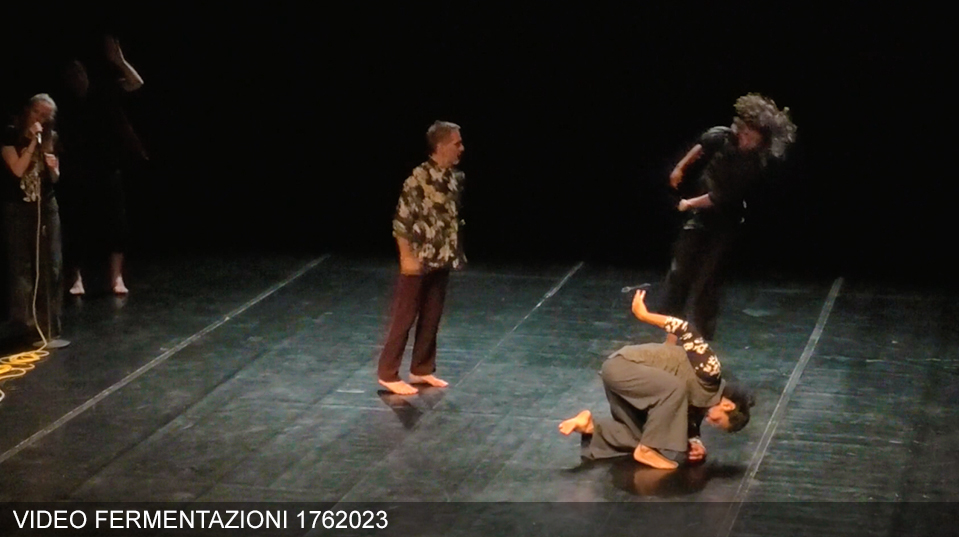
Returning to the core of the discussion, what does it mean to bring art back to the realm of practice? Reconsidering dance as a human practice restores a focus on encountering others. A key area of interest in contemporary dance is the investigation of how dance and art, in general, can bring about changes in the world by questioning the concept of relationships. When we attend a contemporary dance performance, we constantly renegotiate everyday practices. Improvisation is the highest form of negotiation in dance.
Today, improvisation and its associated perceptual factors are widely studied. Improvisation, as a practice, occurs in an infinitesimal fraction of time between anticipation and delay. The human-species body is capable of predicting its own movement through the data it gathers. Being a bipedal species, humans perceive themselves from above and through the kinesthetic channel. Thus, the dancing body is able to collect a series of information that allows it to anticipate its movement. The peculiarity of all this lies in the fact that the body is simultaneously ahead of and behind the movement, because from the moment the movement is enacted, nothing can be done: the antigravity muscles that maintain balance are constantly negotiating with gravity. If anything slips, a fall is likely.
Anticipation - improvisation - delay: improvisation is what exists between anticipation and delay. The dancer who places improvisation at the center of their research is someone who engages in an act of negotiation not only with themselves and the surrounding environment but also with the audience, as they constantly seek to place themselves in a position to grasp the unexpected, acting within a predetermined normative framework. Improvisation can be considered the most democratic artistic form because its starting point is a normativity that constantly self-sustains, regenerates, and transforms.
Pontremoli concludes by inviting his audience to experience improvisation, because if one seeks new elements in dance, they will find them precisely in improvisational performances. Improvisation practice enhances perceptual stimuli and breaks the stereotypes that shape the spectator’s gaze. Many professional dancers develop community projects with the aim of including all bodies, creating a community of dancing beings, because dance is nothing more than an organized behavior of the species.