LA NASCITA DELL’ARTE DALLO SPIRITO DELL’IMPROVVISAZIONE
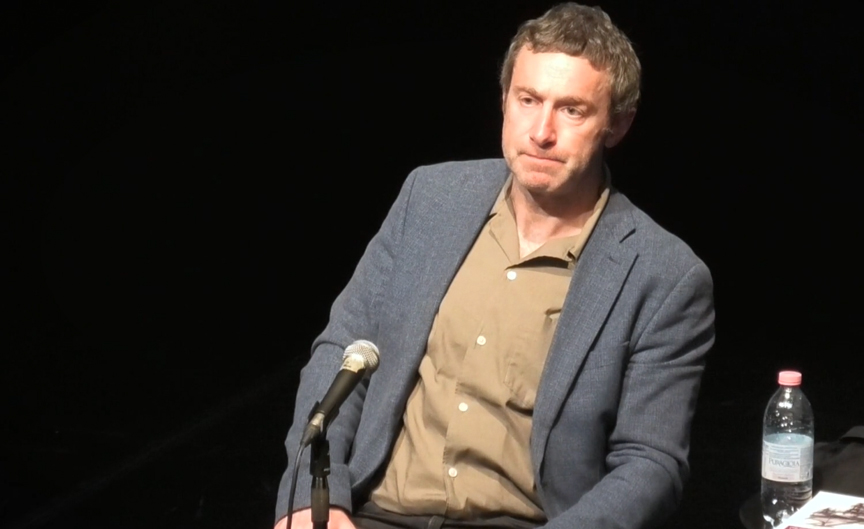
Il titolo dell’incontro “La Nascita dell’Arte dallo Spirito dell’Improvvisazione”, deriva dal testo “La nascita della tragedia” di Nietzsche. Bertinetto, nella parte I suo libro “Estetica dell'improvvisazione” (il Mulino, 2021), riconsidera l’accezione negativa e comune secondo la quale l’improvvisazione è considerata come una reazione ad un imprevisto in maniera raffazzonata. Walter Benjamin intende l’improvvisazione come un agire con la mano sinistra, e secondo questa idea del linguaggio comune molti filosofi hanno concepito un’estetica dell’improvvisazione come un’estetica dell’imperfezione.
Bertinetto prende le distanze da questo tipo di valutazione estetica appoggiando la tesi secondo la quale l’improvvisazione è invece, in qualche modo, paradigmatica all’estetica e all’arte in generale. L’improvvisazione, secondo questa concezione, è posta al centro della nostra esperienza estetica e dell’arte. Luigi Pareyson scrisse un testo nel 1954 intitolato Estetica. Teoria della formatività, nel quale afferma che l’arte è “un fare che inventa il modo di fare”, quindi un fare particolare che rimanda ad un fare artistico improvvisativo.
La tesi che l’arte nasca in qualche modo dallo spirito dell’improvvisazione si basa sull’idea che innanzitutto l’improvvisazione è il modo di agire più naturale che l’essere umano abbia nella sua interazione con l’ambiente. L’essere umano, sulla base di abitudini e pattern di azioni che si acquisiscono anche con l’improvvisazione, tenta di rispondere in modo efficace alle sollecitazioni derivanti dagli altri e dal mondo cercando di dare un senso e stabilendo un rapporto di interazione che non sempre è predeterminato da piani dell’agire. . Questi ultimi, infatti, si modulano in rapporto con la contingenza.
L’improvvisazione, quindi, non è un fare speciale, bensì viene a caratterizzare una dimensione diffusa e generale dell’agire. Tuttavia, è necessario tener conto dell'idea di origine romantica basata su una concezione creativa dell’improvvisazione. Hanna Arendt sostenne che l’azione umana per eccellenza sia iniziativa, dal momento che la creatività dell'ingegno agisce spontaneamente.
Questa idea si interseca con il pensiero comune di considerare l’improvvisazione una modalità propria dell'essere umano di rispondere alle sollecitazioni ambientali. Si tratta, quindi, di comprendere come queste due dimensioni configurino entrambe secondo ciò che è l’agire umano. In tal senso, l’agire umano è un agire creativo in quanto capace di corrispondere alla situazione in cui si trova ad operare. L’agire umano si basa su abitudini, competenze, convenzioni e norme, ovvero condizioni di possibilità dell’azione, che non vanno pensate come contrastanti alla libertà dell’agire, piuttosto costituiscono un “sapere come fare” una cultura che si acquisisce attraverso l’agire stesso. Quindi, nell’atto dell’improvvisazione vengono a configurarsi quelle capacità che rendono l’agire possibile. Tutto ciò non vale solamente per la dimensione quotidiana dell’agire umano, bensì anche per la dimensione estetica e, quindi, artistica.
Il passaggio da una dimensione quotidiana alla dimensione estetica è stato inteso da alcuni studiosi come un salto, altri, invece, gli conferiscono un senso di continuità. Il professor Bertinetto sostiene la tesi secondo cui vi è una continuità tra l’agire umano e l’agire artistico. Il pragmatismo è una corrente filosofica che intende la dimensione artistica come un’articolazione particolare della dimensione creativa che è propria dell'essere umano. Certamente, la dimensione artistica ha delle qualità proprie che determinano una sua particolarità. Tuttavia, ciò non esclude un legame tra le due sfere.
Questo elemento viene elaborato in modo sofisticato da Hegel già nel 1823 nel suo testo Lezioni d’Estetica. Secondo il filosofo, l'essere umano rappresenta se stesso: l’essere umano porta ad espressione il suo essere, la sua libertà, il modo in cui conquista la libertà attraverso il suo agire. Se accogliamo questa proposta, possiamo comprendere meglio il senso dell’improvvisazione artistica. L’essere umano nell'improvvisazione artistica porta ad espressione la sua vicenda esistenziale di interazione con la contingenza, con le situazioni in cui vive, attraverso una continua ricerca di senso dei suoi atti. Questa dimensione di make sense, attraverso il rapporto con la situazione, viene articolata nelle diverse pratiche artistiche per mezzo dell’uso di media e strumenti. Pertanto, le pratiche d’improvvisazione hanno come aspetto principale una dimensione di articolazione della grammatica della contingenza.
Bertinetto racconta la sua partecipazione ad un’improvvisazione che coinvolgeva un light designer, un musicista e un danzatore in un club di Berlino. Un suo amico gli disse che per comprendere cosa fanno gli artisti si deve attingere ad una grammatica della contingenza. A parlare di ciò fu il filosofo Ludwing Wittengstein, il quale intendeva che la grammatica della contingenza fosse un reticolato di norme implicite che si pongono alla base del nostro agire, che è per lo più sociale. Queste norme hanno una particolarità: si costituiscono durante il processo che regolano, ovverosia le pratiche si configurano attraverso le pratiche stesse. Questa è una concezione improvvisativa della normatività delle pratiche umane. La contingenza è un concetto filosofico importante e si può intendere come ciò che potrebbe essere anche diverso da come si presenta, quindi è ciò che accade senza una determinazione necessaria. Dunque, la contingenza non può essere controllabile e neppure prevista. Il fulcro del discorso risiede nell’idea che nelle pratiche artistiche viene a configurarsi una grammatica della contingenza durante il momento performativo: il senso dell'agire si dà nel suo darsi.
L’improvvisazione è un modo in cui l'arte nasce, in cui il rischio dell’errore e la condizione della riuscita non possono darsi al di fuori del processo, bensì si costituiscono attraverso il processo stesso. Il filosofo Kant, che ha fondato l'estetica come disciplina filosofica, nella Critica del Giudizio sostenne che l'esperienza estetica è data dal libero gioco delle facoltà intelletto e immaginazione. I concetti estetici non vengono applicati a situazioni determinate, ma rispondono a un processo di riconoscimento, comprensione e condivisione del giudizio.
Quando affermiamo che “la rosa è bella” non cerchiamo altro che far comprendere all’altro la nostra esperienza estetica riguardante quella rosa attraverso la nostra condivisione di un sentimento, in questo caso espresso con delle parole. Questo è ciò che avviene durante un’improvvisazione, poiché è nell’incontro con l’inatteso che viene a darsi la condivisione di una corrispondenza tra l’azione e la una situazione precisa che si crea e trasforma attraverso il processo performativo stesso.
Nel suo testo, Bertinetto descrive le categorie fondamentali della grammatica della contingenza e sottolinea il carattere autoregolativo e trasformativo della normatività dell’improvvisazione: le norme si configurano attraverso
DOMANDE
1) Possiamo riconoscere due usi dell’improvvisazione: agire improvvisativo durante il processo di creazione e l’improvvisazione come materia di creazione. Far riferimento ad un musicista che improvvisa come fare preparatorio ad una performance è ben diverso dall’assistere ad uno spettacolo d’improvvisazione. Umberto Eco parla dell’improvvisazione come nemica della sperimentazione, perché in quel caso il musicista tende a riproporre ciò che già conosce, cosa che non avviene invece nella fase di ricerca. Cosa pensa di questo?
Bertinetto:
È possibile distinguere queste due pratiche perché, se vogliamo, hanno anche scopi diversi. Una delle categorie dell’improvvisazione è la curiosità, ovvero un carattere di tipo avventuroso e ludico. Certamente in alcune pratiche questo aspetto è maggiormente evidenziato, in altri casi invece si tende a sperimentare maggiormente.
Questa idea di Eco è abbastanza diffusa tra i critici dell’improvvisazione e anche tra molti musicisti. Lo stesso Theodor Adorno sostiene che l’improvvisazione jazz non sia creativa perché gli improvvisatori tendono a ripetere ciò che sanno già. In realtà questo è un pregiudizio, frutto di un’incomprensione che c’è tra l’attività improvvisativa e una certa idea di ripetizione, in altre parole, la relazione che sussiste tra l’improvvisazione e l’abitudine. È chiaro che è necessaria una preparazione per acquisire gli strumenti per creare un’improvvisazione che risulti efficace: l’improvvisazione non si improvvisa. Il punto chiave è che gli artisti si preparano per essere impreparati e questa preparazione non blocca la creatività, anzi, è una preparazione che rende possibile l’attività improvvisativa. La performance può quindi riuscire oppure no. Il tema della riuscita è molto interessante per varie ragioni, poiché, si mette in scena la dimensione dell’attività estetica, della produzione d’arte che si dà nel suo darsi al pubblico. Quindi, la configurazione delle categorie interpretative si danno durante il processo stesso. Quando un’improvvisazione si dà in modo perfetto, sembra quasi che la performance non sia più improvvisata. Si tende a parlare d’improvvisazione quando avvengono delle sbavature, degli errori. Questa idea è un luogo comune dato dal pregiudizio di intendere l’improvvisazione come qualcosa che è fatto male, in modo raffazzonato. La questione chiave è quindi che si può anche sperimentare e ricercare davanti al pubblico. Ci sono dei casi, non solo radicali, ma anche in ambito jazzistico in cui ciò può accadere.
2) Nell’improvvisazione vi è l’uso della citazione, ovvero qualcosa di preconfezionato. In che modo questa forma predeterminata si relaziona al pubblico? Se nell’improvvisazione il pubblico entra a far parte del processo, quindi è complice nell’ascolto dell’inatteso ma anche del conosciuto. Quindi vi è un aspetto di non programmazione anche nelle cose telefonate a seconda della modalità in cui viene espressa nel fare artistico: lo scontato può quindi essere inedito.
Bertinetto:
Questa non è una caratteristica solo dell’improvvisazione, ma anche della composizione stessa. La questione interessante è come questi materiali preconfezionati vengono utilizzati e adattati. Evan Parker ad esempio utilizza frasi che hanno lo stesso ornamento, tuttavia il modo in cui vengono poste nei diversi contesti rendono la qualità improvvisativa. Queste citazioni possono scatenare anche una dinamica di riconoscimento da parte del pubblico, così da renderlo maggiormente partecipe al processo. Un processo è interessante quando riesce a mettere insieme qualcosa di nuovo con delle informazioni già conosciute, già condivise. Se fosse tutto solo nuovo si rimarrebbe estranei al processo. Una buona improvvisazione, spesso, è tale perché riesce a mettere insieme questi due aspetti. Anche una citazione può essere qualcosa di imprevisto prodotto dai performer che il pubblico riconosce come tale e viene catturato da esso. Ci sono tuttavia improvvisazioni che cercano di evitare questi trucchi. Quindi, ci sono diversi generi di improvvisazione.
3) Facendo riferimento a ciò che accadde negli anni 70’, in cui si ricercavano “gabbie” per dare vita ad un’estetica diversa, nel suo articolo estetica come comunicazione viene messo in luce il modo in cui le regole possono essere sconvolte per dare vita a forme nuove. In questo modo, la comunicabilità diventa elemento centrale per poter creare una comunità.
Bertinetto:
Questo ha a che fare con la normatività. Quando si parla di genere si fa riferimento a pratiche in cui vengono condivise abitudini, convenzioni, poiché la comunità si riconosce in una forma di gusto condiviso. La bellezza può essere intesa come forma di comunicazione nel senso di generazione di comunità. Riconoscersi come condivisione di un sentimento. Se viene meno la condivisione il sentimento è privato e non può essere inteso come un giudizio estetico valido.
Quindi, è implicita una dimensione inter-soggettiva e questo comporta la condivisione di alcune abitudini estetiche grazie alle quali si consolida un genere, dandosi così una comunità di gusto. Non c’è forse una definizione oggettiva o soggettiva dei valori estetici della bellezza, probabilmente l’aspetto decisivo è la condivisione di abitudini che si possono riassumere nel concetto di gusto. Teniamo presente che la questione dell’abitudine in estetica è qualcosa di profondamente radicato nell’improvvisazione. L’abitudine è l’altro dell’improvvisazione e viceversa, perché l’improvvisazione si dà sulla base di abitudini e queste ultime, come forma di ripetizione, si trasformano con l’improvvisazione. L’improvvisazione è un sistema retroattivo, in cui i pattern comportamentali coinvolti permettono il suo darsi e nel suo darsi questi si modificano. Questo vale anche per abitudini estetiche. Le abitudini non sono schemi fissi, bensì sono schemi affettivi, dimensioni percettive, che possono configurare i generi artistici che a loro volta non sono delle scatole rigide e immutabili, bensì sono in continua evoluzione e interazione.
4) Come ci si predispone a seguire la valenza di senso quando si improvvisa? Come arrivare in scena con una postura di apertura e lasciare che il proprio senso sia variato dagli altri?
Bertinetto:
Mi sta chiedendo una cosa a cui non so molto rispondere. Ci sono tecniche di apprendimento a una certa attitudine all’improvvisazione. Se l’improvvisazione è una qualità onnipervasiva dell’agire umano, improvvisare bene è un altro paio di maniche. Questo vale anche nel campo artistico, ovvero si può improvvisare male si può improvvisare bene cercando di rispondere in modo attento e efficace per dare senso a ciò che si sta facendo. Pertanto, è necessaria l’acquisizione di una tecnica, di una capacità che si acquisisce improvvisando. Non c’è altro modo di apprendere l’improvvisazione se non improvvisando, così come non c’è modo di apprendere una lingua se non parlandola. Questo apre tutto un altro discorso sul fatto che qualunque pratica umana si acquisisce attraverso l’esercizio. Solo l’esercizio riesce a far sì che si incorpori la capacità. In tal senso, l’abitudine che si acquisisce riesce a dare un’organizzazione al nostro comportamento, in modo tale da facilitare il nostro agire rispetto alla situazione, dunque, la facilità del nostro improvvisare.
5) Quindi, l’esperienza è acquisizione del metodo?
Bertinetto:
Sì, certamente.
6) Secondo quest’ultima parte del discorso, quindi l’apprendimento sembra essere un processo che non si conosce e per apprendere facciamo qualcosa che non sappiamo, e l’improvvisazione sembra essere un processo di apprendimento continuo, cosa è che la differenzia dalle altre arti? Quale è la specificazione dell’improvvisazione in sé?
Bertinetto:
Grazie per la domanda. Infatti, sembra che l’improvvisazione sia tutto e che quindi non abbia più una sua specifica, delle qualità definitorie che la distinguono da pratiche che non consideriamo improvvisative. Tale questione io la pongo in questi termini: credo che l’improvvisazione artistica si distingua da un’esecuzione di una partitura nella musica attraverso un riconoscimento di gradi. L’improvvisazione intesa come tale ha delle caratteristiche specifiche che sono paradigmatiche per l’agire umano e per le pratiche umane nel loro complesso. Le caratteristiche specifiche sono di carattere ontologico, quindi hanno a che fare con il fatto che le circostanze spazio temporali dell’agire sono parte dell’agire stesso, poi l’irripetibilità, l’impossibilità della correzione.
Poi ci sono caratteristiche che definiscono l’agire improvvisativo come efficace e non, e sono categorie dell’improvvisazione che hanno a che fare con l’emergenza del senso, con la presenza che forma senso, con la curiosità, quindi, un atteggiamento ludico e avventuroso rispetto alla dimensione dell’agire ed infine l’autenticità pensata in modo particolare. L’autenticità in estetica è intesa come un senso di responsabilità rispetto alla situazione, ovvero assunzione di responsabilità rispetto a ciò che si sta facendo in relazione ad una situazione. L’improvvisazione, secondo queste categorie, è così un processo che make sense as a process of sense-making, ossia un processo che ha senso se appare come processo di formazione di senso. Se non c’è questa formazione di senso attraverso il processo, allora l’improvvisazione in qualche modo non emerge come tale. Queste qualità specifiche dell’improvvisazione come tipo particolare di produttività artistica, come attività distribuita, perché il performer è sia attivo che passivo, poiché collabora con altri individui e con la situazione in cui sta agendo, con una tradizione artistica, con i materiali ecc., sono paradigmatiche per l’arte, e in modo più specifico per la normatività delle pratiche umane.
La tesi che difendo secondo la quale l’improvvisazione possa fornire il paradigma dell’azione stessa, si pone contro l’idea che l’azione umana sia configurata da un’intenzione predeterminata, quindi come causa dell’esecuzione stessa dell’azione. Si può pensare, invece, un’intenzionalità nell’azione umana che si configura nell’agire stesso, quindi azione come improvvisazione. Di conseguenza, ci sono caratteristiche specifiche nell’improvvisazione artistica e a causa di queste caratteristiche si può riconoscere l’improvvisazione come paradigmatica dell’arte in generale. Ciò non vuol dire che tutta l’arte sia improvvisazione, bensì che se viene a mancare questo elemento improvvisativo è faticoso intendere un fare come un fare artistico, quindi creativo.
7) Lei ha appunto utilizzato la parola ‘spirito’…
Bertinetto:
Sì, è lo spirito questa attitudine di cui stiamo parlando. Molti artisti che non si riconoscono come improvvisativi hanno comunque questo spirito dell’improvvisazione. Uno di questi è Mozart, il quale era solito stravolgere e rimodellare delle strutture predeterminate.
è quanto mi sembra.
Grazie a tutti.
-
EN ENGLISH
THE BIRTH OF ART FROM THE SPIRIT OF IMPROVISATION
The title of the lecture, “The Birth of Art from the Spirit of Improvisation”, derives from Nietzsche’s “The Birth of Tragedy”.
In Part I of his book Aesthetics of Improvisation (Il Mulino, 2021), Bertinetto reconsiders the common negative connotation of improvisation, often seen as a haphazard response to the unexpected.Walter Benjamin described improvisation as “acting with the left hand” and based on this colloquial view, many philosophers have conceived an aesthetics of improvisation as an aesthetics of imperfection.
Bertinetto distances himself from this interpretation, instead supporting the idea that improvisation is, in some way, paradigmatic of aesthetics and art in general. In this view, improvisation lies at the core of our aesthetic and artistic experience. In 1954, Luigi Pareyson wrote Aesthetics: Theory of Formativity, in which he stated that art is “a making that invents the way of making”- that is, a particular kind of doing that points to improvisational artistic creation.
The idea that art is born from the spirit of improvisation is based on the concept that improvisation is, above all, the most natural way human beings act in response to their environment. Humans, based on habits and action patterns often developed through improvisation, attempt to respond effectively to stimuli from others and the world, seeking to make sense of their experience and establishing an interaction not always guided by predetermined action plans. These plans are, in fact, shaped in relation to contingency.
Improvisation, therefore, is not a special kind of doing, but rather characterizes a widespread and general dimension of action. However, we must also consider the Romantic idea of improvisation as inherently creative. Hannah Arendt argued that the quintessential human action is initiative, as the creativity of the mind acts spontaneously.
This notion aligns with the common belief that improvisation is a natural way for humans to respond to environmental stimuli. Thus, the task is to understand how these two dimensions both shape human action. In this sense, human action is creative because it is capable of responding to the context in which it operates. Human action is based on habits, skills, conventions, and norms - conditions that enable action and should not be seen as constraints on freedom, but rather as a “know-how” a culture acquired through action itself. In improvisation, these capacities are manifested, making action possible. This applies not only to everyday life but also to the aesthetic and artistic realms.
The shift from everyday experience to aesthetic experience has been interpreted by some as a leap, and by others as a continuum. Professor Bertinetto argues that there is indeed continuity between human and artistic action. Pragmatism, as a philosophical movement, views artistic expression as a particular articulation of human creativity. Of course, the artistic dimension has its own unique qualities, but this does not exclude a link between the two spheres.
This concept is elaborated upon by Hegel already in 1823 in his Lectures on Aesthetics. According to him, humans express themselves - bring their being, their freedom, and the way they achieve it into expression through action. Accepting this idea allows us to better understand the meaning of artistic improvisation: in it, the human being expresses their existential engagement with contingency and the situations they live through, constantly searching for meaning in their actions.
This process of “making sense” in response to situations is articulated across artistic practices using different media and tools. Therefore, improvisational practices primarily involve articulating a grammar of contingency.
Bertinetto describes participating in an improvisation involving a light designer, a musician, and a dancer at a Berlin club. A friend told him that, to understand what artists do, one must tap into a grammar of contingency. Philosopher Ludwig Wittgenstein spoke of this: a network of implicit norms underlying our predominantly social actions. These norms are particular in that they are created during the very process they regulate - i.e., practices form through the practices themselves. This represents an improvisational conception of the normativity of human behavior.
Contingency, a significant philosophical concept, refers to that which could be otherwise - what happens without necessary determination. Thus, it is neither controllable nor foreseeable. The core idea here is that, in artistic practices, a grammar of contingency emerges during the performative moment: meaning arises in the very act of performance.
Improvisation is a way in which art comes into being. The risk of failure and the potential for success cannot exist outside the process - they arise within it. Kant, the philosopher who founded aesthetics as a discipline, wrote in Critique of Judgment that aesthetic experience stems from the free play of the faculties of understanding and imagination. Aesthetic concepts are not applied to specific situations but emerge through recognition, understanding, and shared judgment.
When we say, “the rose is beautiful,” we seek to share our aesthetic experience with another through a shared feeling, expressed, in this case in words. This also occurs during improvisation: in the encounter with the unexpected, a correspondence arises between action and a situation that takes shape and transforms through the performance itself.
In his text, Bertinetto outlines the key categories of the grammar of contingency and emphasizes the self-regulating and transformative nature of improvisation’s normativity: rules emerge through their application and are given during and by means of the process they govern. The response to the unexpected follows a self-regulating and evolving normativity.
QUESTIONS
1) Can we distinguish two uses of improvisation: improvisational action during creation and improvisation as the subject of creation.
Referring to a musician improvising as preparation for a performance differs from witnessing an actual improvisational show. Umberto Eco says improvisation is the enemy of experimentation because the musician tends to reproduce what they already know, unlike in the research phase. What do you think?
Bertinetto
Yes, these practices can be distinguished as they often have different goals. One key category of improvisation is curiosity—an adventurous and playful trait. Some genres highlight this more than others. Eco’s idea is widespread among critics and musicians alike. Theodor Adorno even claimed jazz improvisation isn't creative because improvisers just repeat what they already know.
But this is a prejudice—an incorrect conflation of improvisation with repetition or habit. Indeed, preparation is required to acquire the tools for effective improvisation: improvisation itself cannot be improvised. The key is that artists prepare themselves to be unprepared, and this preparation enables creativity, rather than blocking it. A performance may succeed or fail. Success is fascinating, especially since it displays the aesthetic process as it happens before an audience. When an improvisation is flawless, it may not even seem improvised. People tend to call it “improvisation” only when there are errors. This is a misconception—an unfair assumption that improvisation is poorly executed.
The important point is that experimentation and research can happen in front of an audience. This isn’t limited to radical cases—jazz is one example where this can occur.
2) In improvisation, there is often quotation - pre-formed element. How does this predetermined element relate to the audience?
If the audience becomes part of the improvisation process, it is complicit in hearing both the unexpected and the familiar. So even clichés can become novel depending on how they are expressed artistically.
Bertinetto:
This is not unique to improvisation but applies to composition too. The interesting part is how pre-formed materials are used and adapted. Evan Parker for example, used phrases with similar ornamentation, but the way he placed them in various contexts gave them an improvisational quality. Such quotations can spark recognition in the audience, making them feel more involved. A good improvisation often combines the new with the familiar. If everything were completely new, the audience might feel alienated. Quotations, when unexpectedly delivered, can captivate. Some improvisers avoid these tricks entirely, so we’re talking about a range of improvisational approaches.
3) In the 1970s, artists experimented with “structures” to produce new aesthetics.
In your article Aesthetics as Communication, you explore how disrupting rules can lead to new forms. In this way, communicability becomes central to creating a community.
Bertinetto:
This relates to normativity. When we talk about genres, we refer to shared practices, habits, and conventions - because a community identifies with a shared sense of taste. Beauty can be understood as a form of communication - a means of generating community. Recognizing shared feeling creates community. If there’s no shared experience, the feeling remains private and cannot be an intersubjectively valid aesthetic judgment.
Hence, a shared aesthetic habit supports the emergence of genre, which, in turn, sustains a community of taste. Aesthetic value, then, is not objectively or subjectively defined, but rather based on shared habits - which we might call “taste. Habit” and improvisation are interdependent: improvisation is rooted in habit, and habits are transformed through improvisation. Improvisation is retroactive - patterns allow it to happen, and through improvisation, these patterns evolve. This also applies to aesthetic habits. They are not fixed schemes, but affective and perceptual patterns that shape and reshape artistic genres.
4) How does one approach improvisation with openness - letting their sense be altered by others on stage?
Bertinetto:
That’s a tough question. There are training techniques to develop the right mindset for improvisation. If improvisation is a pervasive trait of human action, then improvising well is another matter. The same applies to the arts - improvisation can be good or bad, depending on how attentively and effectively one responds to the situation.
Hence, one must acquire technique - a skill gained by improvising. Just as language is learned by speaking it, improvisation is learned by doing it. This ties into the idea that all human practice is acquired through repetition. Only through practice can skills become embodied and help us act more easily in different situations - thus enabling effective improvisation.
5) So, experience is the acquisition of method?
Bertinetto:
Yes, absolutely.
6) If learning means doing something we don’t yet know how to do, and improvisation is a continuous learning process; what makes improvisation distinct from other arts? What defines improvisation itself?
Bertinetto:
Great question. It might seem like improvisation is everything, and thus loses specificity. I frame it this way: artistic improvisation differs from performing a score by degrees of recognition.
Improvisation has specific traits that are paradigmatic for human and artistic practices. These include:
spatiotemporal contingency: the circumstances of action are part of the action; irreproducibility; no possibility of correction; emergence of meaning; presence that creates sense; curiosity: a playful, adventurous attitude; authenticity: a special sense of responsibility toward the situation.
Improvisation is a make-sense process, a process of forming meaning. If this formation doesn’t happen, then it doesn’t truly count as improvisation. These defining qualities make improvisation a distinct artistic productivity and a distributed activity: the performer is both active and passive, interacting with others, with the situation, with artistic traditions, and with materials.
My thesis is that improvisation can offer a paradigm for action itself - challenging the view that human action is driven by predetermined intention. Instead, we can think of intention as forming within the action: action as improvisation.
Therefore, improvisation has specific features that make it paradigmatic of art in general. This doesn’t mean all art is improvisation, but rather that without this improvisational element, it's hard to view an action as truly artistic or creative.
7) You used the word “spirit”…
Bertinetto:
Yes I do, the “spirit” is the attitude we’re talking about. Many artists who don’t see themselves as improvisers still possess this spirit of improvisation. One such figure is Mozart, who frequently altered and reshaped pre-set structures.
That’s all for this evening. Thank you.