THE ART OF KEEPING GRASSROOTS ALIVE
Charlotte Zerbey:
I met Ingeborg Zachariassen through an article she wrote, which struck me as extremely insightful and relevant to the situation we are experiencing in Italy today, where in recent years many funds have been cut, particularly in contemporary dance and live performing arts. The Ministry of Culture denied access to artistic production funding even to Company Blu, a historic contemporary dance company. It is worth noting that the Ministry’s decision was communicated in July, when the year’s activities had already been carried out and planned, leaving the company in serious difficulty.
I then joined the movement Vogliamotutt’altro, a movement that has existed for several years. It was the occupation of the Teatro Valle in Rome in 2011 that served as the symbolic and practical moment inspiring and mobilizing an entire generation of artists and performing arts workers, taking on the role of “trailblazer” for Vogliamotutt’altro and other similar initiatives. When new cuts were announced in July 2025 many people like me joined the movement. This led to the formation of groups in various cities across Italy.
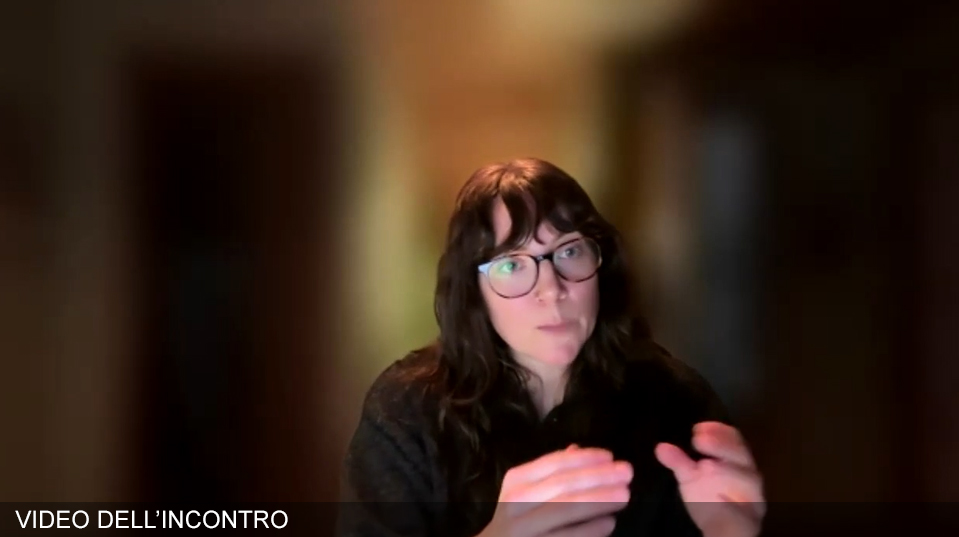
Ingeborg will speak for approximately 35 minutes. There will be a space for questions, followed by a break. Finally, we will have the Vogliamotutt’altro Florence group, which proposes a unique experience: participating in the “Tavolo Immaginare”, an open space for individual contributions, aimed at imagining a shared and personal future that already resonates with who we are today and who we wish to become.
Ingeborg Zachariassen:
It is a true honor to be here today. I want to thank Charlotte and Company Blu for their courage in being present, in taking a stand, and in creating this space.
What you are facing in Italy, the cuts to funding, the narrowing of what is considered “acceptable” art, often influenced by political fear, is not an isolated phenomenon. This is happening across Europe. The fact that you are here today, and that you are working with the Three Horizons method by Sharpe, is highly significant. It shows that you are not waiting for permission to act, but are already building the future.
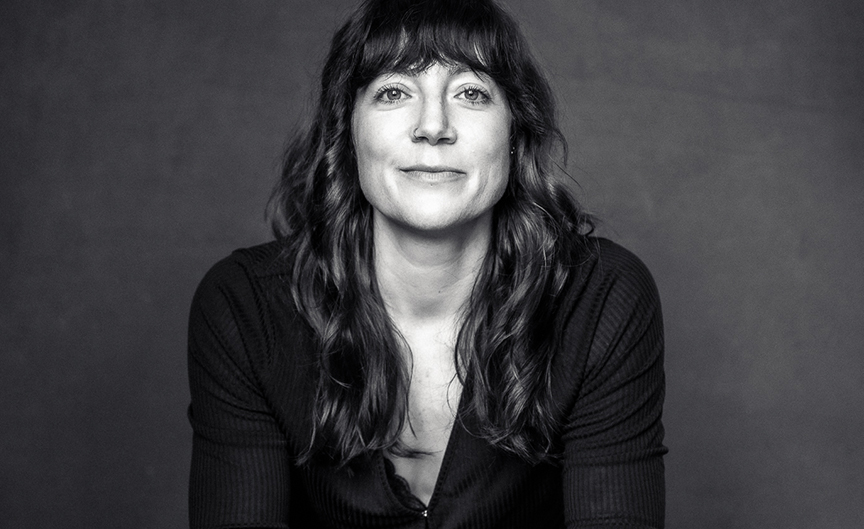
You may be wondering who I am and why I am here with you today. I am a dancer and choreographer, artistic director of a dance platform in Gothenburg, Sweden, called No Deadline, which also organizes a festival. In recent years, I have started writing about dance, interviews, reviews, and political commentary, developing a critical approach that links dance to power dynamics.
Through conversations with colleagues in other countries, I realized that even Sweden, often perceived abroad as a utopia, is no longer the stable and safe place many imagine. Those days are over, especially regarding the stability of the cultural sector and the level of public funding. Often, change starts by “cleaning one’s own garden.” This is why I began engaging with these topics. It is not just about funding cuts; it is a deliberate attack on the independent scene, particularly contemporary dance, often driven by the far right. This tendency has existed for some time, but after the pandemic it became even more visible.
Through my writings, I came into contact with the reality in Budapest, Hungary, where people have lived for years under a strongly authoritarian system: politics controls universities, culture, and the media. This raises a crucial question: how can we prevent this from happening in our countries? How can democratic rights remain intact while still allowing us to do our work? It is easy to feel powerless and isolated. What we can do, however, is raise awareness. That is why I began interviewing artists, choreographers, and artistic directors: to learn from them and amplify our collective voices.
The fact that one of my articles reached Charlotte is already proof of the power of writing. It shows that we are not alone, that we are fighting similar battles in different contexts, and that we can learn from each other. The recent cuts in Italy, which affected Company Blu as well, are not random. They target organizations that work on issues such as gender, identity, power structures, and that use the body as a tool of investigation. The body is never neutral.
I will try to say it in Italian: vogliamo tutt’altro (“we want something else”).
In Budapest, the process was very similar to what is happening here: first funding cuts, then pressure on institutions, finally a climate of fear leading to self-censorship. People begin to wonder if it is acceptable to speak on certain topics. The most serious consequence is isolation. This is not an individual failure but a sign of democratic erosion. Collective trust is lost, and individualism becomes a survival strategy.
The work you are called to do today is not only about recovering funds but about rebuilding the conditions that allow people to come together, meet, and exist together. When independent artists disappear, democracy disappears. The democratic imagination is lost. Independent dance is, by nature, precarious, but it is also a space where norms are continually challenged through the body and movement. This is why it is targeted: because it represents alternatives, freedom, and possibilities. And this is precisely why it is essential.
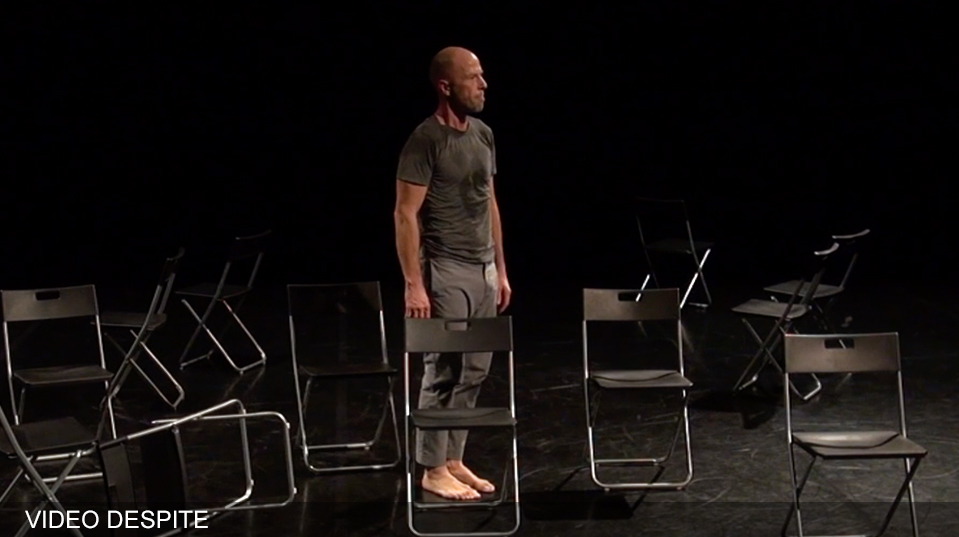
Artists like Katie Duck, Charlotte Zerbey, Alessandro Certini, and many others teach us that improvisation is inherently political: it is responsiveness, risk-taking, collective awareness. All of this is needed when democracy is being eroded. To the younger generations, I want to say: your work is essential. It represents the intelligence of the body, adaptability, and non-hierarchical collaboration. If these qualities disappear, the whole system collapses.
I repeat: independent dance is part of democracy and a powerful symbol of freedom.
Even if art should not be instrumentalised, today it is important to assert its value strongly. Neuroscience shows that even simply watching dance develops empathy and social awareness. Dance activates the same brain networks as music, influencing perception, emotion, and memory. We do not just watch it, we feel it. It is a deeply collective and human experience.
The greatest challenge is to bring people together. Yet this difficulty can become leverage. Movements that have resisted have done so by prioritizing connections, not perfection.
Communication does not have to be perfect: it can be messy, improvised. What matters is continuity, returning to one another. Methods like the Three Horizons are fundamental because they create a shared language and a common horizon in a moment of fear.
I want to close with a positive example: in Ireland, a basic income for artists was introduced. This is the result of years of work, data collection, and solidarity policies. The pilot project was so successful that it will become permanent in 2026. Canada is also following this path. These policies exist and demonstrate that democracies can choose to value artists.
Change is what you are already building today.
Democracy is alive as long as we continue to imagine alternatives.
Let’s be honest: funding cuts are real. But that is not everything. Here there is a community of artists, thinkers, dancers, makers.
And the questions remain open:
What future can we build together?
Which alliances can make it possible?
QUESTIONS
1) What you have been describing now is what has been going on in every country in the west. Can you share your situation in Sweden and give some suggestions of how you all have responded to this to this critical situation.
Zachariassen:
I must say that in Sweden there is, let’s say, an extreme-right party that has taken power. It did not happen overnight; it happened over the years, but now it is increasingly present, and there is very strong rhetoric against art. Today one has the feeling that we are at a decisive moment to make our voices heard and also to highlight the positive aspects of art. To give even more concrete data: the Minister of Culture, actually the Minister of Culture from the Conservative Party, wants to cut public funding for art. To quote what she says, she “wants art to stand on its own two feet,” meaning that it should support itself through foundations and philanthropists, which in Sweden is not possible. There are no foundations, there is no tradition linked to this, and therefore this means that independent dance would be left to wither.
The budget for culture is the lowest it has been in the last 26 years; it represents 0.62% of the total budget, i.e., of the state’s total budget. Of this 0.62%, the majority of funds are allocated to institutions, the largest and most stable ones, and the field of independent dance is not taken into consideration at all. Independent theatres are forced to close one after another.
2) What are the artists in Sweden doing to address this situation with corrective practices?
There are consortia and conglomerates of choreographers and dancers who are trying, for example, to analyze the numbers and data, such as the funding allocated to independent dance, because these figures are not, for example, accessible or available. What they do is write political commentaries, for example, in newspapers, but they do not have effective answers.
Zachariassen:
Personally, I am really dedicated to the medium of writing and publishing, in order to reach people who I think should be aware of this situation: the public, but also various types of recipients. For example, I write for the local newspaper in Gothenburg, but I also write for specific dance-focused journals, sector publications, and international ones. What I am concretely doing at the moment is writing articles and publications aimed directly at politicians.
3) Are there also connections with other sectors of the art and culture world and with public-sector workers?
Zachariassen:
There is a very strong union which in Swedish can be translated as Stage and Film, so performing arts and cinema. It brings together cultural workers in theatres, and they are doing a good job, for example.
I am emphasizing dance in particular because it is very marginalized within the independent arts, so what I am trying to do is to give more power specifically to dance. I also write about the art and culture world in general, not only about dance, but here it seemed to me the most appropriate context to speak specifically about dance.
A concrete example is this museum: The Cultures of the World. In Sweden something very frightening happened. The museum has always had a curatorial approach strongly dedicated to inclusion, and it was contacted by the U.S. embassy, on behalf of Trump, offering money for exhibitions, basically for organizing exhibitions, but only on the condition that the content most closely related to inclusion would be removed. We do not actually know how many of these episodes happen; it is a warning sign. Even in Sweden, although newspapers did report on this specific incident involving the museum, we do not know how many others may be occurring.
And also the press, the media in general, especially those identified with more left-wing views, have faced cuts to funding and financial support, with the additional pretext that they were not selling enough copies.